
They are not dead—and neither are their stories. Their memory offers a mirror—and a map—for the living. With every grave or haunting story that I study, I toast those who came before us. As a literature professor and cemetery historian, my work combines my love of words and the stories of those from the past. Welcome! -Sharon Pajka
Friday, February 13, 2026

Saturday, October 18, 2025
Tuesday, July 29, 2025
Wednesday, May 21, 2025

Sunday, May 18, 2025
Thursday, April 25, 2024
Saturday, February 17, 2024
Tombs and Tomes Book Festival at Congressional Cemetery
I will be at the Tombs and Tomes Book Festival at Congressional Cemetery 


Wednesday, November 1, 2023
October Candlelight Tours at Old City Cemetery-- the best living history event!
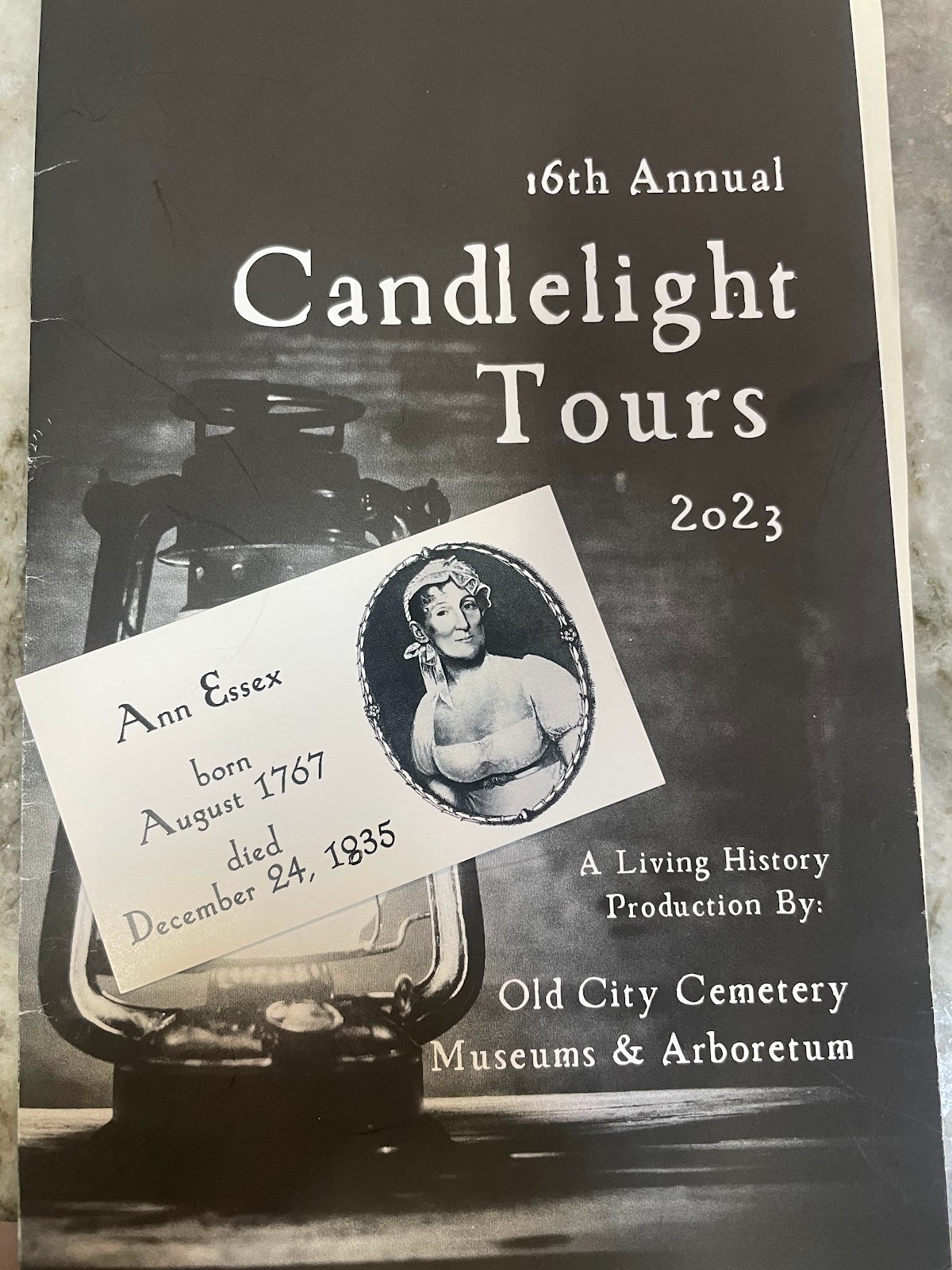
the cemetery, so the evening felt extra special.
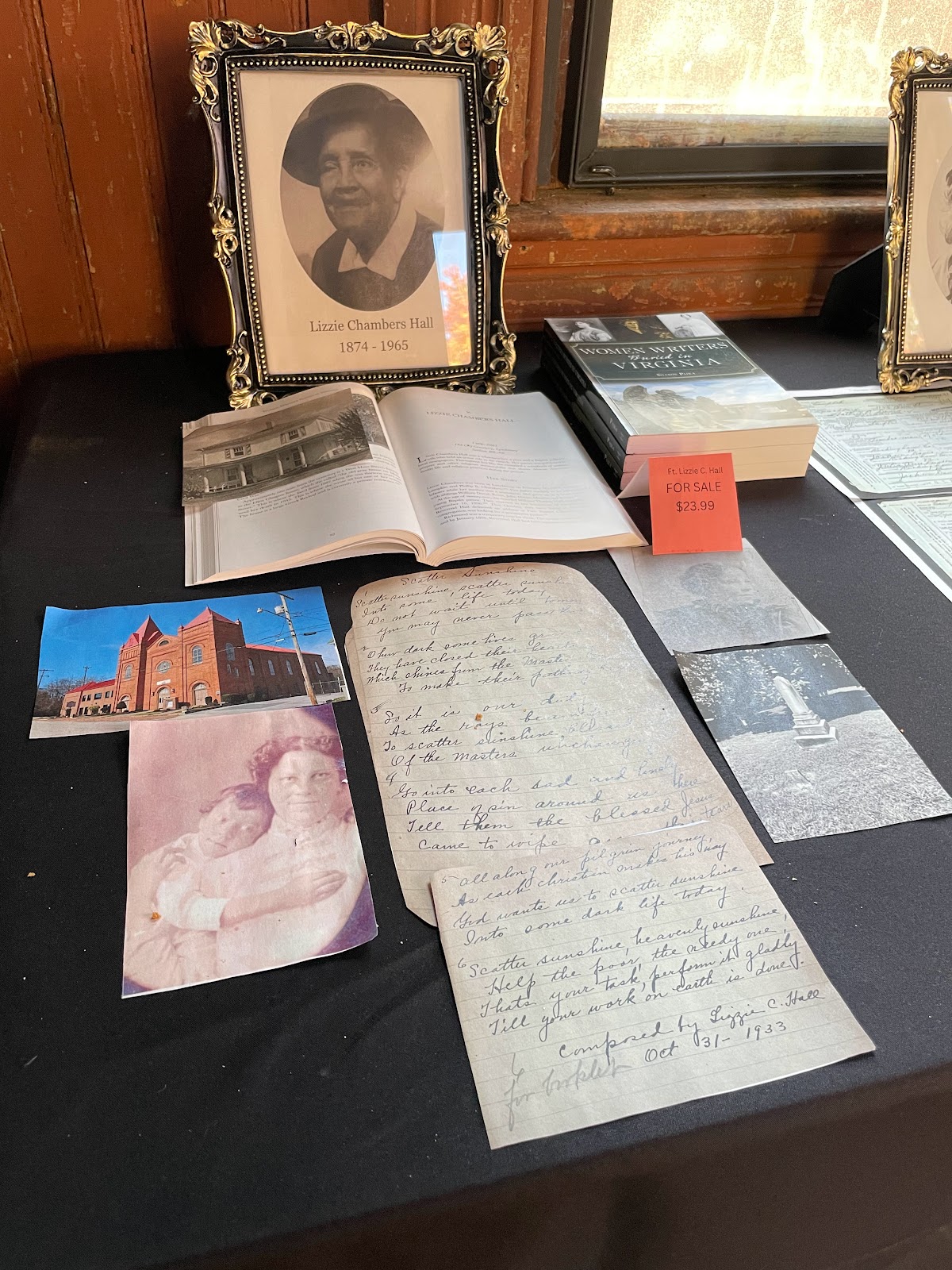
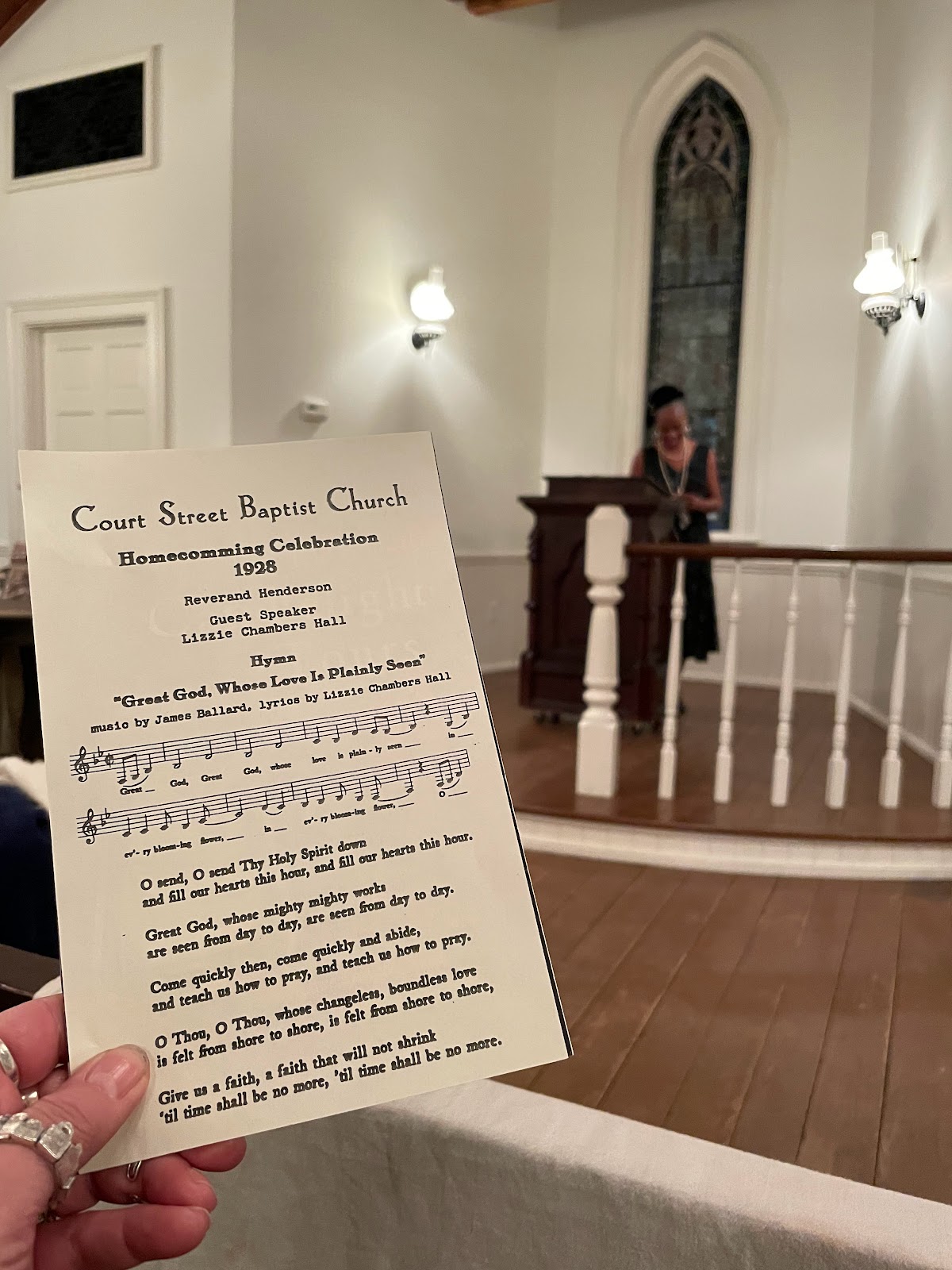 It was everything that I wanted it to be and more! It was one of the best living history events that I've ever witnessed, which just makes me love Old City Cemetery even more.
Saturday, October 21, 2023
Book signing at Old City Cemetery tonight!


Sunday, October 8, 2023
Saturday, September 30, 2023
Ashland Museum guided walking tours and HistoryTalks

 |
| Click image for the Ashland Museum Facebook page |
On Tuesday, Nov 7, Sharon Pajka, literature professor and cemetery historian, will talk about her book Women Writers Buried in Virginia. The HistoryTalk also takes place in Brock Commons SunTrust Theater [Randolph-Macon College] at 6p.m.
Thursday, September 21, 2023
October 21st, from 5:30 - 8pm at Old City Cemetery- Last Night of their Candlelight Tours

"Announcing a Very Special Guest on October 21st, from 5:30 - 8pm! Dr. Sharon Pajka, author of Women Writers Buried in Virginia, will be joining us to chat about her book, and sign copies for anyone who is interested! Her book features (among lots of incredible women) the writing & life of Lizzie Chambers Hall, who rests here at OCC, and who is a character in this year's Candlelight Tours"
Monday, May 22, 2023
Wednesday, May 17, 2023
Pollinators Tour at Old City Cemetery
1863 Brown's Island Laboratory Disaster- the graves in Shockoe Hill Cemetery

On May 10, 2023, I attended a history tour at Shockoe Hill Cemetery. I was excited because Bert Dunkerly, a historian, author, and National Park Ranger was the guide and because of the topic—the Brown’s Island Disaster.
On Friday, March 13, 1863- Friday the 13th- the Confederate Laboratory, a munitions manufacturing facility on Brown’s Island that produced much of the ammunition for the Confederacy, and which employed about 300 women and girls, exploded. The Richmond Whig reported that “the force of the explosion demolished about fifty feet of the house, the sides being blown out and the roof falling…”[I]
Dunkerly’s tour explicitly focused on the fourteen young girls who were victims of the 1863 explosion who are buried in Shockoe Hill Cemetery. This was the first time Dunkerly gave the tour and I was looking forward to hearing their stories.
The Laboratory employed about 300 women and girls. They were working class people hoping to make a dollar to two dollars per day by producing small arms cartridges and artillery ammunition. The location of the disaster was a structure that held a variety of activities, including breaking open cartridges to be reused, and filling new cartridges. As Dunkerly explained, there was loose powder everywhere and these activities should have been done in the same space.
One teenager, Mary Ryan, an Irish immigrant who “was known for being careless” and had been corrected prior to the disaster, was working with friction primers that were used to ignite the powder charges in ammunition. While Ryan was working with the primers, one became stuck; she banged the wooden block to dislodge it.
 |
| Richmond Whig, March 14, 1863. |
I grew up about twenty miles from Brown’s Island but the explosion wasn’t something that I was taught in school. I don’t recall learning anything about it until adulthood perhaps because it involved many young women including those as young as 10 and they were mostly German and Irish immigrants. The tour was held nearly 160 years and two months after one of the worst manufacturing accidents of the Civil War in the South and unfortunately, it was poorly attended. I point this out for a reason that I will explain later.
 | |
|
 |
| Alice Johnson, 12 |
 |
| Blankenship, Richmond Dispatch, March 20, 1863 |
Dunkerly’s tour explicitly focused on the fourteen young girls who were victims of the 1863 explosion who are buried in Shockoe Hill Cemetery. This was the first time Dunkerly gave the tour and I was looking forward to hearing their stories.
The Laboratory employed about 300 women and girls. They were working class people hoping to make a dollar to two dollars per day by producing small arms cartridges and artillery ammunition. The location of the disaster was a structure that held a variety of activities, including breaking open cartridges to be reused, and filling new cartridges. As Dunkerly explained, there was loose powder everywhere and these activities should have been done in the same space.
One teenager, Mary Ryan, an Irish immigrant who “was known for being careless” and had been corrected prior to the disaster, was working with friction primers that were used to ignite the powder charges in ammunition. While Ryan was working with the primers, one became stuck; she banged the wooden block to dislodge
it.
 | |
|
Richmonders rushed to the scene only to be met by victims who were seriously wounded from burns, lacerations, and blunt force trauma. The wounded were taken to General Hospital #2 that had been the former tobacco factory of S. W. Bailey and Company.
I can only imagine how overwhelmed the families must have felt. And while there were advertisements in the newspapers and Richmonders donated funds to help with the costs of the injured, burials began immediately with several of the victims being interred on the same day.
 | ||
|
 |
| Virginia Page, Richmond Dispatch, March 16, 1863. |
|

|
| Mary Valentine, 14, and Margaret Drustly, 16 |

Martha Clemmons, 25, and Margaret Alexander, 14 |

Virginia Mayer, 12, and Wilhelmina Defenbach, 15 |
 |
 |
| Nannie Horan, 14 |
My photos of the graves of Mary Ellen Wallace, 12 and Anne E. Bolton, 14 did not turn out but I plan to return to visit these girls .
One poignant moment of the tour was when Dunkerly shared how with so many war-related memories happening, this disaster did not continue to make the newspapers. His research could not find mention of the first or tenth anniversaries being recognized with wreath-laying ceremonies or even tributes in the paper. With so many lives affected by the explosion, it's unlikely the tragedy was forgotten by those close to the victims. A low tour turnout reinforced the message of these girls being forgotten. I'm so appreciative of researchers like Dunkerly and the Friends of Shockoe Hill Cemetery for working to keep their stories alive.
Wednesday, May 3, 2023


Saturday, June 12, 2021
Presentation- "Cemetery Guidebooks and Forgotten Women: Women Writers Buried in Virginia Cemeteries"
Tuesday, June 1, 2021
Lecture- "Cemetery Guidebooks and Forgotten Women" is this Sunday, June 6th at 12pm ET

Many historic cemeteries include
self-guided maps and visitor guides. These guidebooks are heavily focused on
military heroes, founding fathers, political leaders, and the who’s who in that
region’s history. I quickly scan guides to find the famous or infamous females
who helped build a region’s history. More often than not, from the dozens of
entries, there are usually only a few women mentioned rendering the majority of
women invisible. In 2020, I made a point to create my own guidebook. My first presentation about my
research, "Cemetery Guidebooks and Forgotten Women" is this Sunday,
June 6th at 12pm ET. This FREE lecture is presented as part of The Life &
Death Online Virtual Event, June 4-6, 2021. A unique event exploring matters of
life, death and beyond...For more details about the LIFE & DEATH ONLINE
VIRTUAL EVENT, visit: https://www.facebook.com/groups/lifeanddeathevent2021 My research showcases forty-four
women writers buried in Virginia cemeteries who have had an impact on local
American history. Gothic novelists, writers of Westerns, and African American
poets, the women writers in this collection include those who were widely
popular during their lifetimes, those whose work may not have lasted the test
of time due to the nature or style of the writing, those who still show up in
college anthologies, and those whose works were made into popular movies. The profiles include a Pulitzer
Prize winner, the first woman writer to be named Poet Laureate of the
Commonwealth of Virginia, the bestselling mystery author often called "the
American Agatha Christie," the first woman to top the best-seller lists in
the twentieth century, the first Virginian African American women to be
included in the Norton Anthology of Modern Poetry, the writer so popular that
when she died it was the first time that a court ruled that a deceased person’s
name was taxable, one of the “Devil Diarists” of Winchester, wives of Civil War
leaders who completely reinvented themselves after the war, suffragettes,
authors of children’s literature, and even a poet who received praise from
Edgar Allan Poe. While my research is specific to
Virginia, it is also universal in that I hope it inspires others to seek out
the women who had an impact on their region’s history. A wealth can be found
standing in the very locations where these women lived and were buried.

Part of my collection of cemetery maps and guidebooks